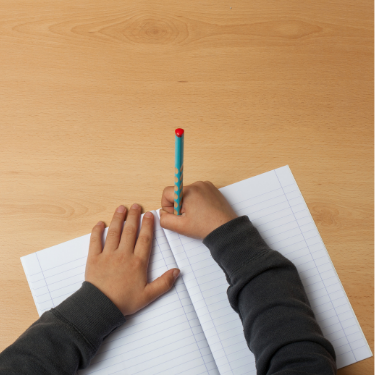
Many parents spend years wondering why their bright, curious child is struggling to read. They watch their child work twice as hard as their classmates and still fall behind. They hear “they’ll catch up” from teachers until eventually it becomes clear that catching up isn’t happening on its own.
Dyslexia is the most common learning difference, affecting an estimated 1 in 5 people. Yet it often goes unidentified for years because the signs aren’t always obvious — especially in children who are smart enough to compensate for a while.
Here are five signs that your child might have dyslexia.
1. They struggle with rhyming and word sounds. Dyslexia is fundamentally a phonological processing difference — meaning the brain has difficulty connecting letters to the sounds they represent. Early signs often show up as difficulty rhyming, trouble breaking words into syllables, or struggling to identify the first sound in a word.
2. Reading is slow, labored, and exhausting. A child with dyslexia doesn’t read words automatically. Every word requires significant mental effort to decode. Reading feels like hard work because it is — and that exhaustion often shows up as avoidance, frustration, or meltdowns around reading tasks.
3. They read words correctly one minute and not the next. This one confuses parents and teachers alike. A child with dyslexia may read a word correctly on one line and misread the same word three lines later. This inconsistency isn’t laziness or lack of effort. It reflects how dyslexia affects word recognition and memory.
4. Spelling is significantly behind reading. Most children with dyslexia are better readers than spellers because reading allows for context clues. Spelling requires retrieving the exact letter sequence from memory — a task that is particularly difficult with dyslexia. Wildly inconsistent or phonetically creative spelling is a common red flag.
5. They are clearly intelligent but school feels impossible. This is perhaps the most heartbreaking sign. A child who can tell you everything about their favorite topic, who asks sophisticated questions, who understands complex ideas — but cannot get those ideas onto paper or decode a page of text. The gap between their obvious intelligence and their reading performance is one of the clearest indicators of dyslexia.
What to do if you recognize these signs:
Start with a psychoeducational or neuropsychological evaluation from a licensed psychologist who specializes in learning differences. A formal evaluation gives you the diagnosis and documentation your child needs to access appropriate intervention and funding.
And then find a specialist who knows exactly what to do with that diagnosis.
At Ember and Ivy Literacy, we work with students with confirmed and suspected dyslexia diagnoses using structured literacy intervention grounded in the Science of Reading. Book a free Discovery Call to learn how we can help your child.